
Inside The Paper Process
Fiber And Pulp
Distinguish cellulose fiber, pulp, stock, and recovered fiber while tracing the preparation stages that come before sheet formation.
Stock And Refining
See how refining, consistency, fillers, and sizing influence the fiber suspension before it reaches the forming section.
Forming And Drainage
Follow diluted stock through the headbox and wire, where drainage and fiber distribution create a continuous wet paper web.
Pressing And Drying
Compare mechanical pressing with thermal drying and see how each stage removes water and changes the developing sheet.

Questions The Course Makes Clear
Use process diagrams, paper samples, and simple measurements to connect production stages with the properties you can observe in a finished sheet.
Pulp becomes part of a carefully prepared fiber suspension before sheet formation. The stock must be distributed, drained, and consolidated into a wet web before pressing and drying can produce a usable paper sheet.
Not necessarily. Basis weight measures mass per area, while thickness describes sheet caliper. Comparing samples with a scale and thickness gauge shows why paper bulk, density, and grammage should be considered separately.
Visible variation can reflect how fibers were dispersed and distributed during forming. Examining paper against transmitted light helps reveal formation differences without assuming that one process variable explains every irregular area.
Clarify Your Starting Point
Ask how the course approaches pulping, stock preparation, forming, pressing, drying, finishing, and introductory paper measurements.
You can also clarify which paper samples or simple measuring tools are useful and how industrial processes are covered without unsupervised machine or chemical work.
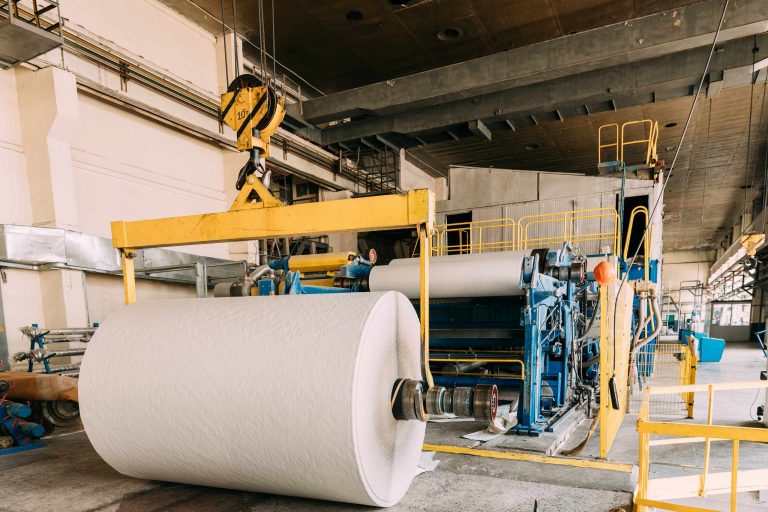
Why Papermaking Uses So Much Water Before Drying the Sheet
Why does papermaking begin with cellulose fibers suspended in so much water if the final result is supposed to be a dry sheet of paper? Initially, this process can seem wasteful, since water is added to make stock, only to…
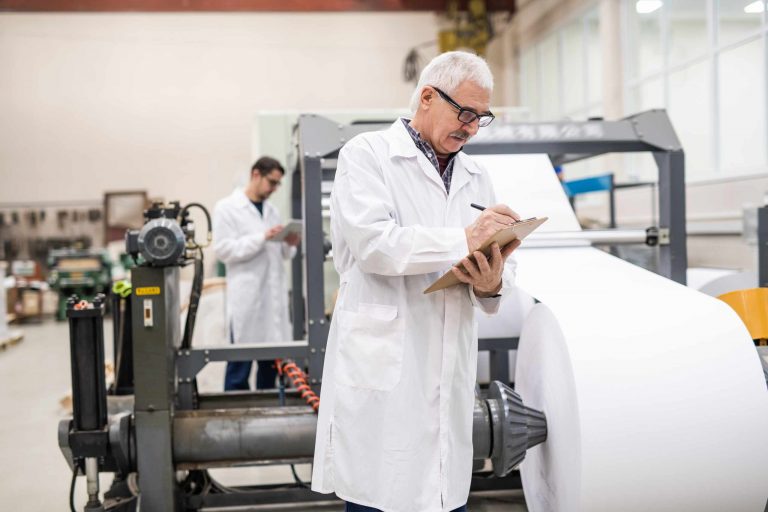
Pulp, Stock, and Paper: Terms Beginners Should Not Mix Up
Lay down a spoonful of prepared pulp next to a glass of diluted fiber suspension and compare both with a finished sheet of paper. All of them could contain cellulose fibers, but they are in fact completely different things at…
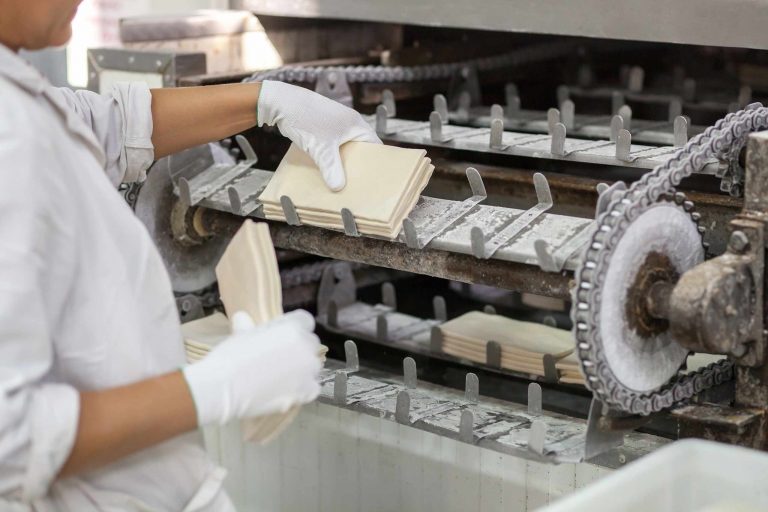
Basis Weight Versus Thickness: Two Similar-Looking Sheets Can Be Very Different
Two sheets of paper can appear very similar in size and color on a workbench. Yet, when you lift them, flex them, and place them on a scale, you find significant differences. That is because two basic paper properties, basis…

From Fiber Suspension to Paper Sheet: What Really Happens During Formation
Paper isn’t formed by making a thick layer of pulp and pressing and drying it flat. Before there’s a sheet, the fibers are dispersed in a large volume of water, resulting in a flowing fiber suspension known as stock. Here,…